
Monumental Church


Want to see inside? We'd love to share this unique and fascinating site with you! Click here to learn more about tours.
On December 26, 1811, 643 festive patrons filled the seats of the Richmond Theatre on Broad Street. Moments before the second act, an innocent mistake by a stagehand caused a chandelier to collide with scenery made of flammable materials.
A massive fire erupted killing 72 men, women, and children, both black and white. Richmond’s own Monumental Church, standing on the exact site of the former theatre, honors those victims and serves as both a memorial and an architectural achievement.
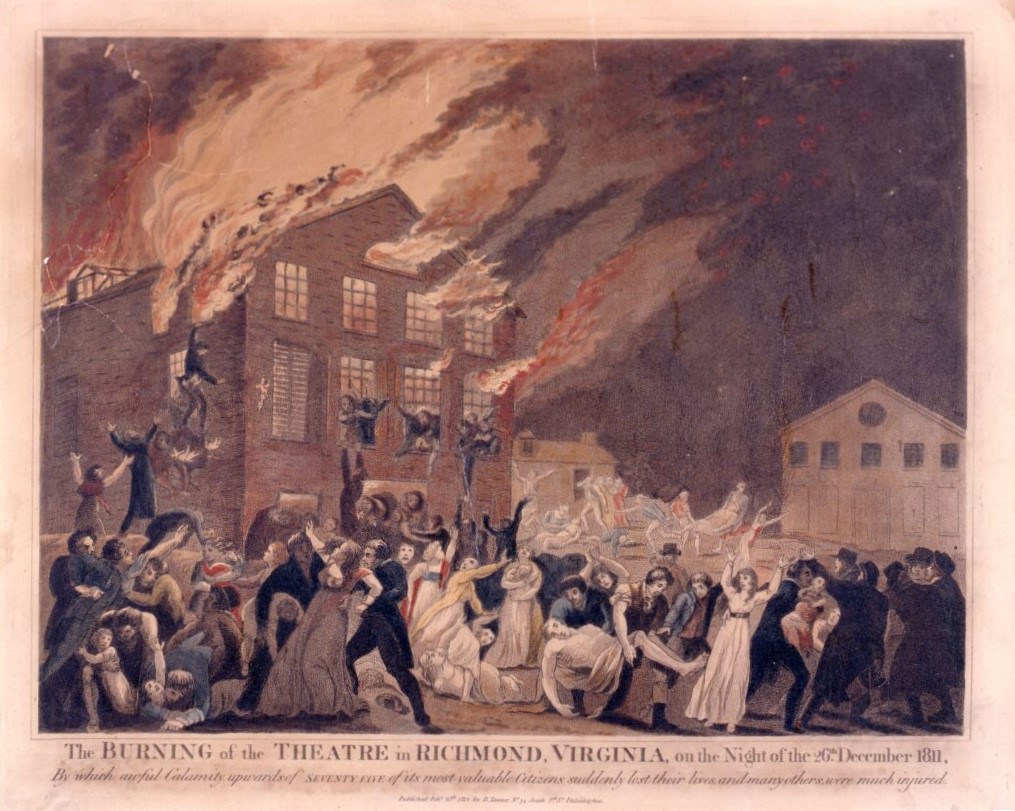
The burning of the theatre in Richmond, Virginia, on the night of the 26th. December 1811. Image courtesy of the Valentine.
A CITY IN MOURNING
One of the worst urban disasters in American history at the time, the fire devastated members of the small Richmond community. Nearly everyone either knew someone who had died or was connected to a family that had lost a friend or loved one. Among the dead were former U.S. Senator and Bank of Virginia president Abraham Venable, as well as Governor George W. Smith, who had been inaugurated just thirty-one days prior to the tragedy. Messages of sympathy poured in from around the world. Richmonders wore black and abstained from business and public events for an entire month. City officials evoked a penalty of “six dollars and sixty-six cents for every hour that any public show, spectacle or dancing was exhibited,” (the number six-six-six referencing the mark of the beast in the book of Revelation.)
A common crypt was erected on the site to house remains of the victims of the fire. To stand over the crypt as a memorial, the heartbroken community of Richmond voted to build a much-needed church. Chief Justice John Marshall successfully led the fundraising efforts.
HEROES
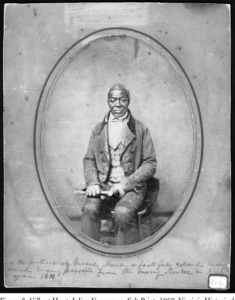
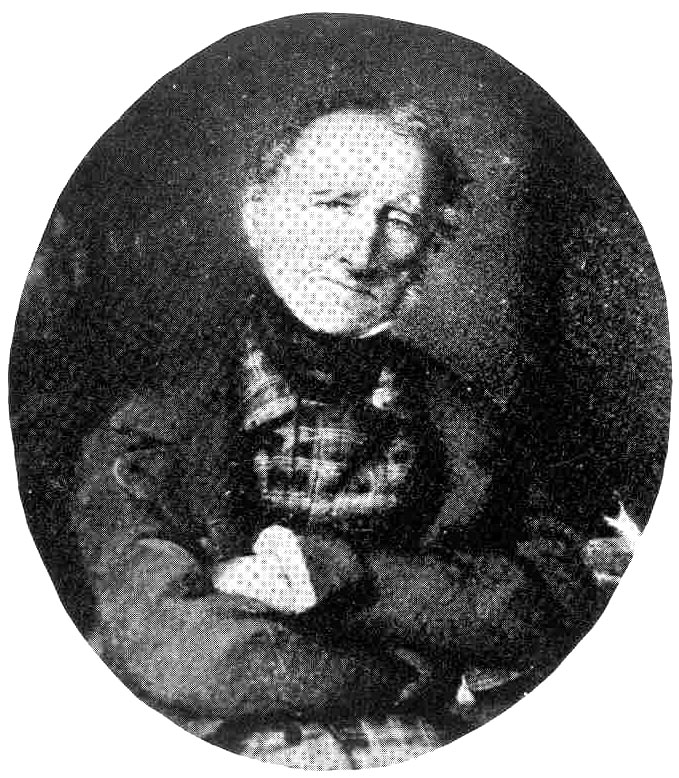 The Richmond Theatre, a multi-story building with several balconies, was built long before fire safety regulations or emergency exits. Passageways were narrow, exits few, and doors opened inward, trapping terrified people inside. The heroes of the night were Dr. James D. McCaw (right) and Mr. Gilbert Hunt (left), an enslaved man who rescued many patrons. Dr. McCaw lowered individuals from the windows into the arms of Hunt. As a result of his unselfish deeds, Hunt, a trained black-smith, became a folk hero and eventually purchased his freedom. He left Richmond for several years but returned and lived out his final days there. In 1930, a memorial plaque was given in Hunt’s honor by a member of the Monumental Church congregation.
“The scene surpassed anything I ever saw, the wild shrieks of hopeless agony, the piercing cry, ‘Lord, save me’ or ‘I perish,’ the uplifted hands, the earnest prayer for mercy, for pardon, for salvation, I think I see it now- all just as it happened.”
– Gilbert Hunt
MAKING A MEMORIAL
 An open competition was held to determine the memorial’s construction and design. One of America’s first native born architects, Robert Mills was awarded the honor of constructing the memorial. Among his competitors was Benjamin Henry Latrobe, Mills’ own mentor and teacher. Mills is best known for designing the Washington National Monument, as well as four other auditorium-style, domed churches in Charleston, Baltimore, and Philadelphia. Monumental is not only the most elaborately designed of these churches, it is the only one still standing. It remains one of the earliest and best examples of Greek Revival architecture in the United States and was one of the first American monuments to incorporate Egyptian motifs. The original design included a spire and second portico to the right of the rotunda, both of which were never built. 1812 marked the beginning of construction. To construct the front portico, builders used Aquia sandstone from Northern Virginia, the same material used in the White House. To cover the exterior, white stucco painted with a lime wash was used.
ARCHITECTURAL INFLUENCES
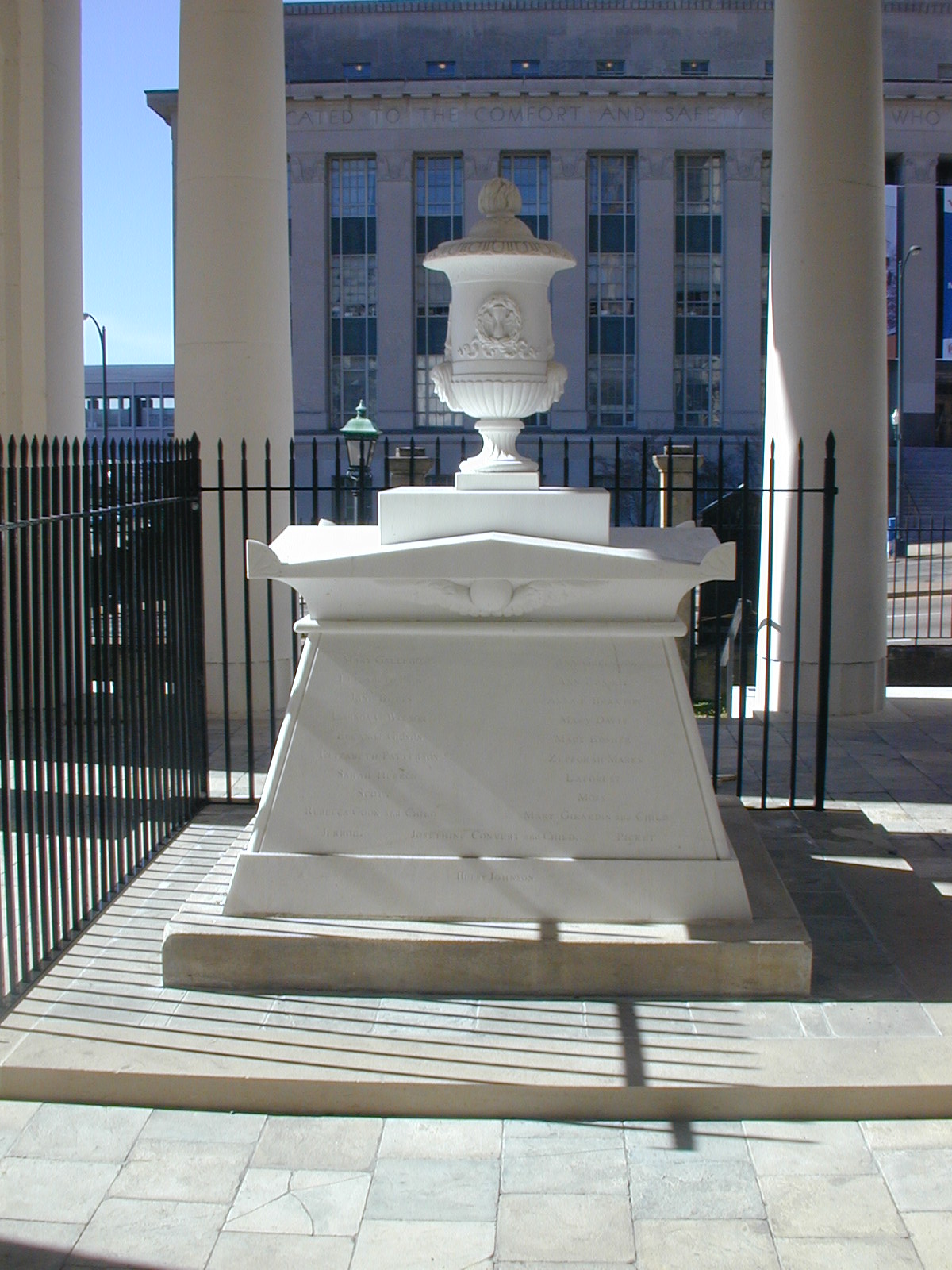
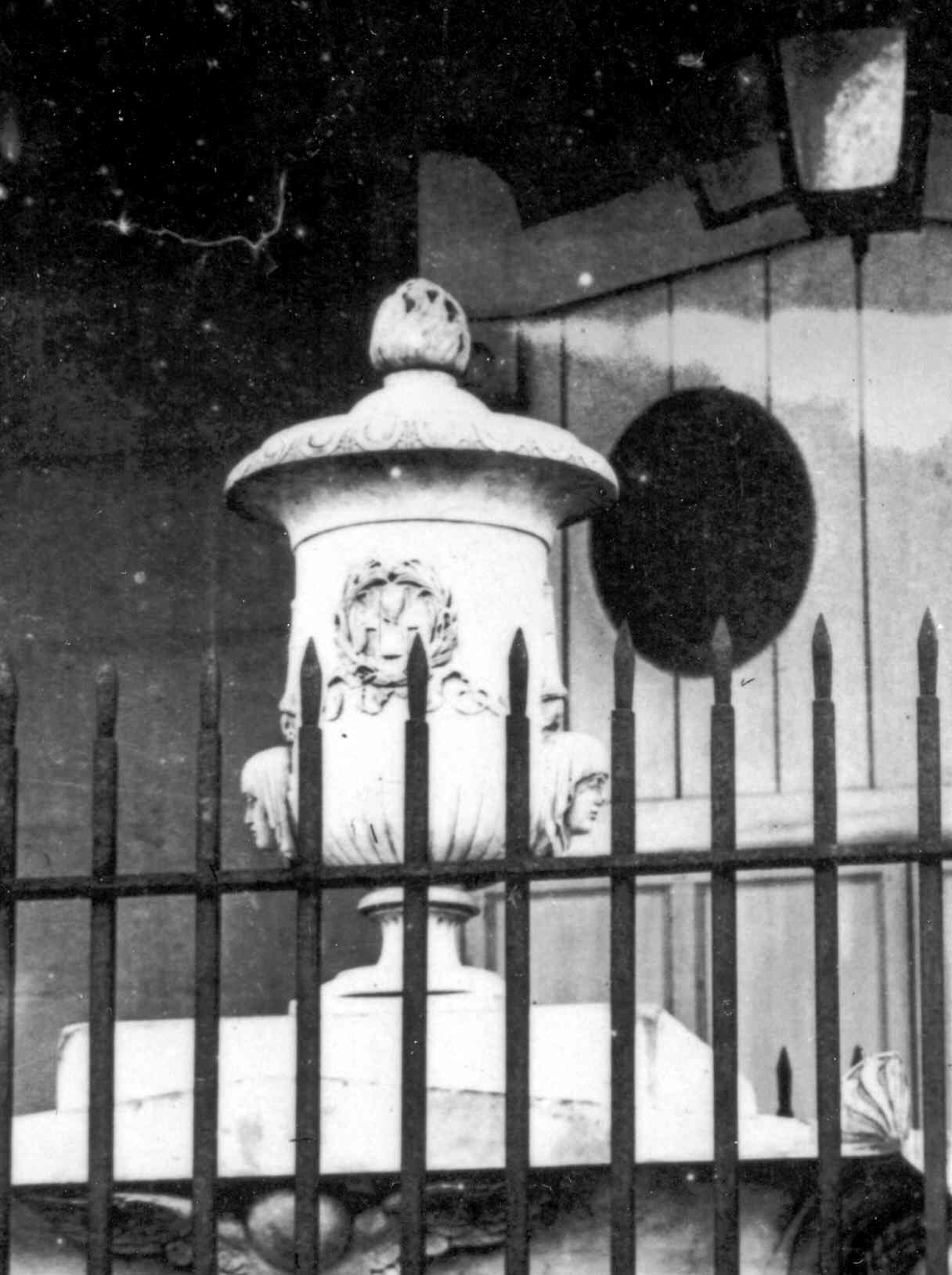 Mill's design uses Roman, Greek, and Egyptian motifs, along with funerary imagery, to embellish this innovative architectural form: a church also serving as a memorial monument. The center of the portico features a Roman inspired urn sitting atop of a sarcophagic base. Mills had the names of the victims carved into the walls of the sarcophagus. He decorated its cornice with a winged orb, representing the creation and preservation of life, often found on Egyptian temples. The marble urn is adorned with funerary symbols including drapery, stars, and a wreath with flying ribbons. The faces of shrouded women also appear, which can be traced back to a 1728 book of architecture that Mills was likely to consult. Mills also incorporated the urns seen on the portico frieze. These lachrymatories, or tear vials, recall the ancient Roman tradition of honoring the dead by collecting every tear shed during mourning.
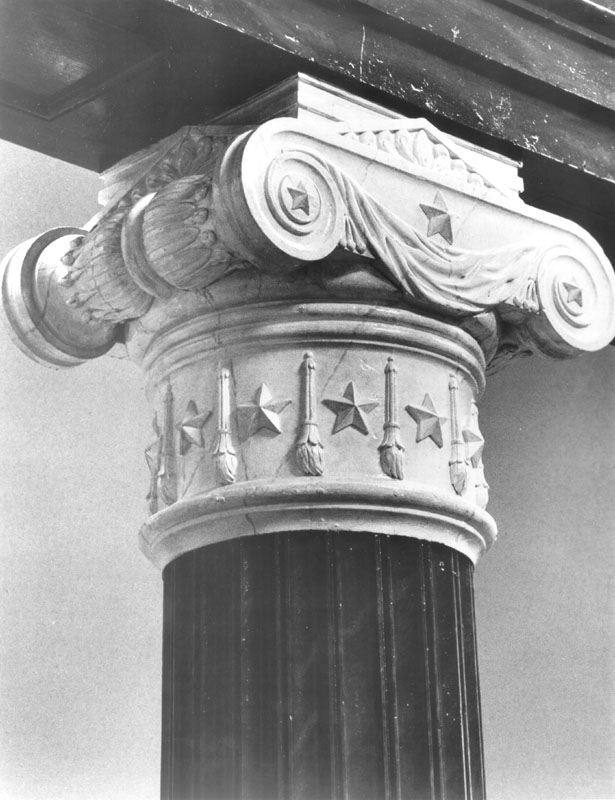 The interior of the church features more symbols of mourning. Capitals on the columns on each side of the pulpit feature upside-down torches, stars, and drapery. The upside-down torches symbolize life snuffed out, the stars represent heaven, and the drapery references a burial shroud. The columns under the balcony are capped with sarcophagus-shaped capitals. Unique to Mills’ design is a distinctive menorah–shaped item which is shown above the capitals. A sarcophagus shape can be seen over each doorway and window, both interior and exterior.
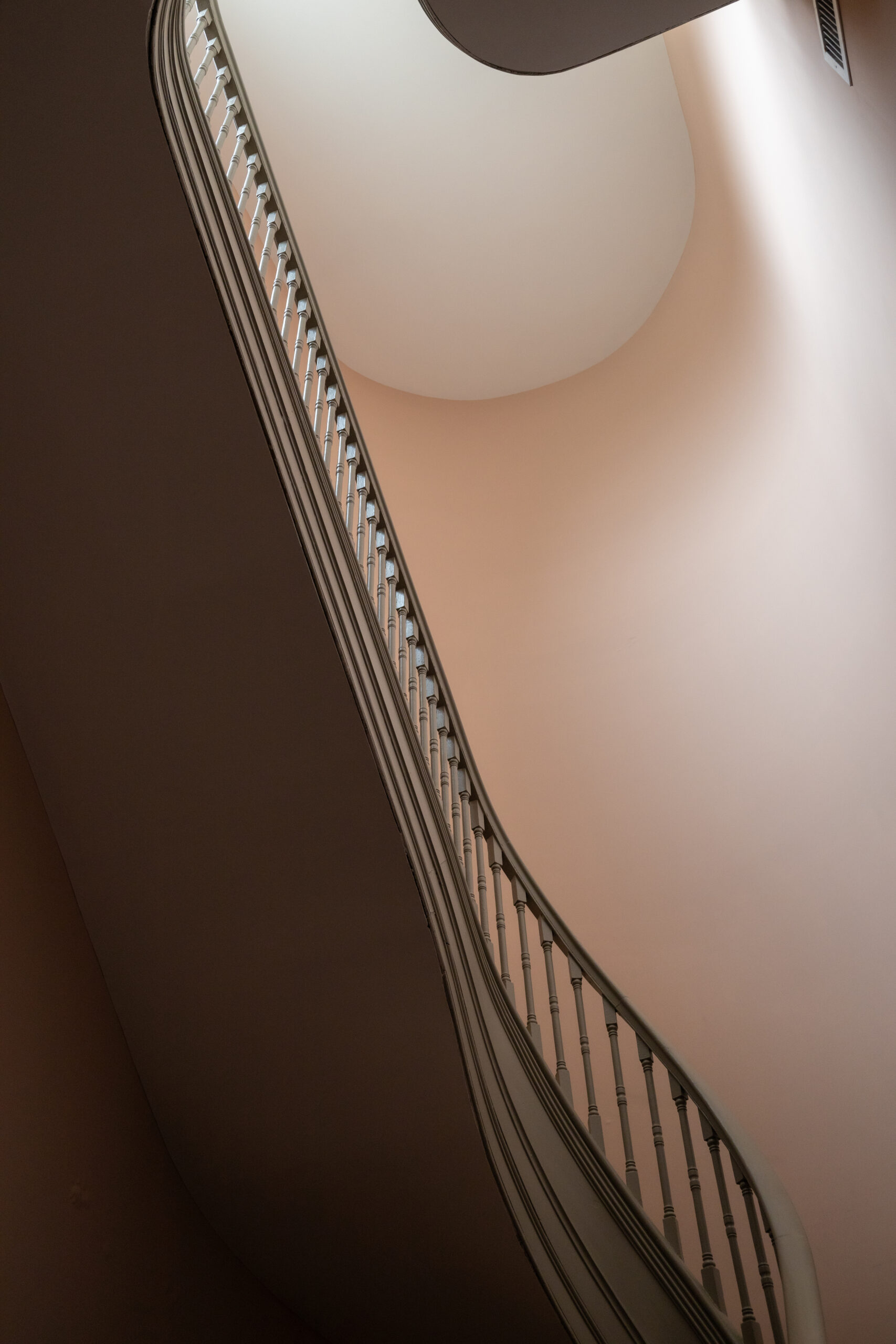
The unprecedented low-profile saucer dome that Mills placed over the auditorium is a Neoclassical feature favored by two of his mentors, Thomas Jefferson and B. Henry Latrobe. The slender, laminated, wooden ribs of the dome were invented by 16th century French architect Philibert Delorme. Mills utilized “Delorme’s Method” of dome construction to vault the large free-span rooms of the church. The wooden dome and cupola cover a broad expanse of space effectively allowing natural light to flood the interior.
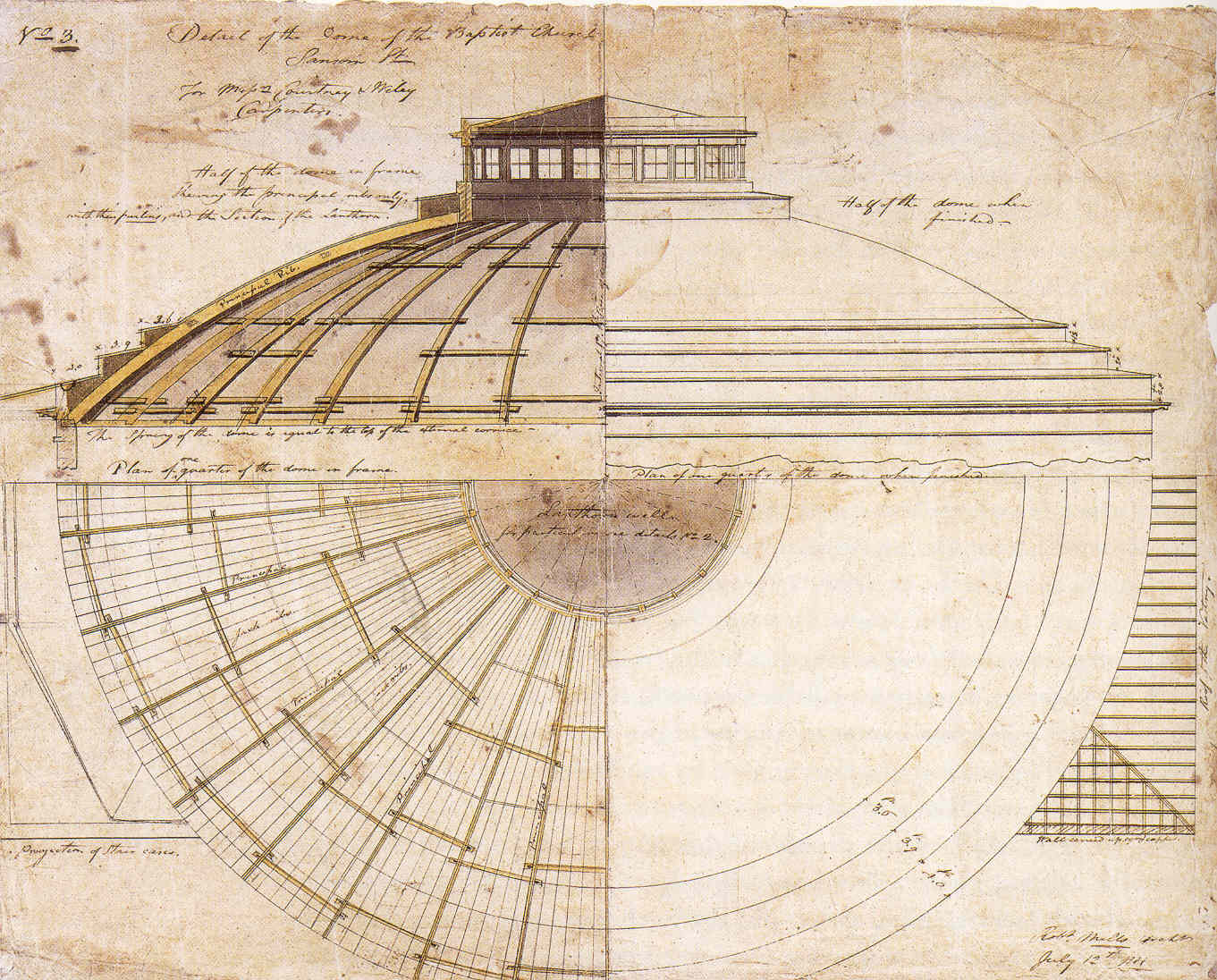
Monumental’s octagonal auditorium measures seventy feet in diameter. The large cupola at the dome’s crown supports Mills’ concept of a lightflooded interior, as do the large, clear windows. The auditorium style reflects the emphasis placed on preaching and teaching, directing all eyes toward the preacher. Mills repeated this favored concept in many of the other churches he later designed.
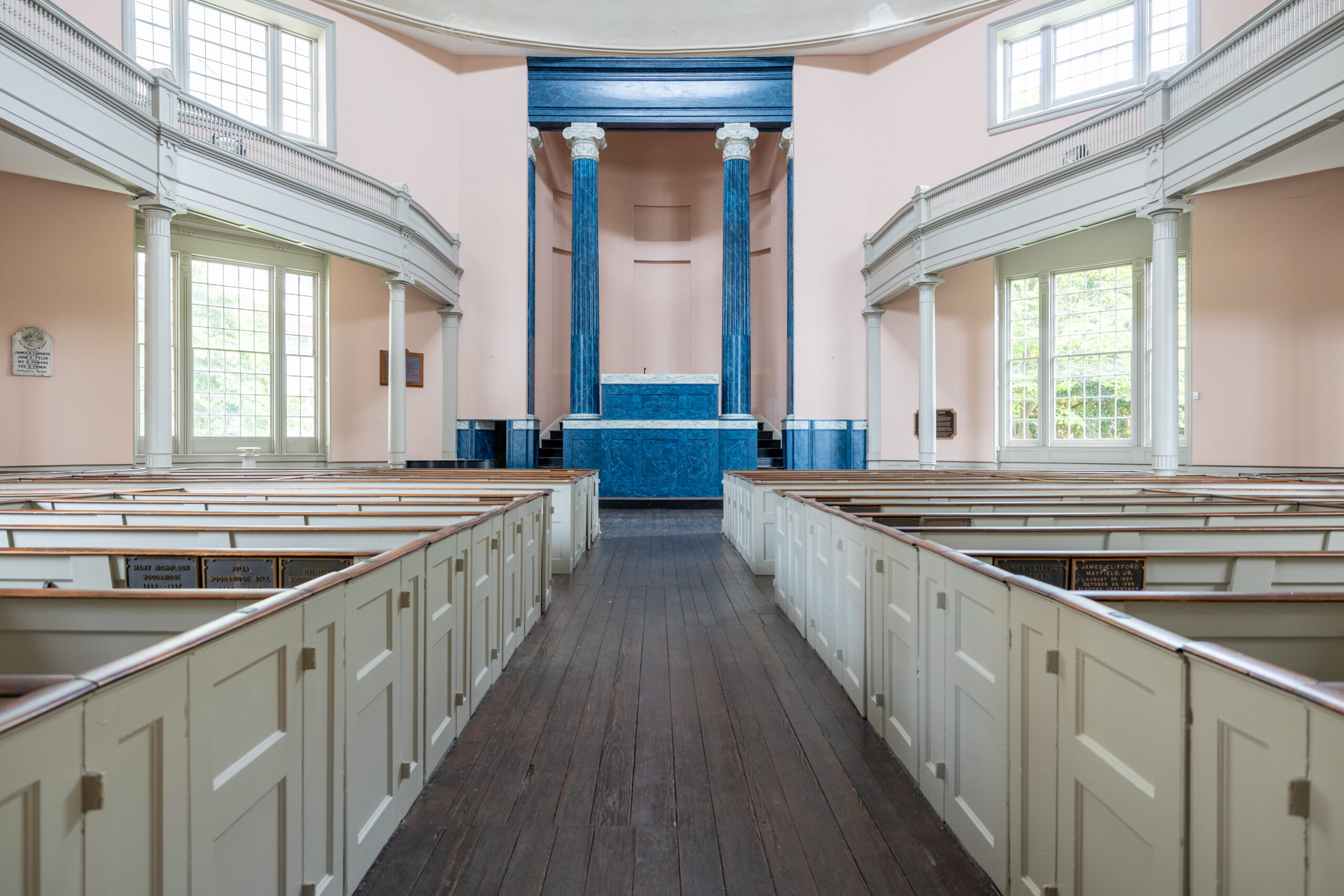 Photo courtesy of Mathew Oswald Photography
A PLACE OF WORSHIP
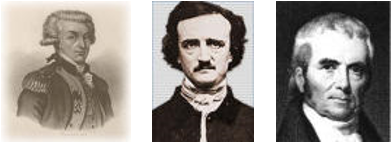
On May 4, 1814, less than three years after the fire, Monumental Church opened its doors to the public and held its first Episcopal church service. The Marquis de Lafayette, Edgar Allen Poe, and John Marshall (pictured below) are just a few of the notable patrons who attended service at Monumental over the years. Until 1846, every Virginia governor except two worshipped there as well. After serving the community for 150 years, it ultimately gave birth to two of Richmond’s largest Episcopal congregations, St. Paul’s and St. James’s.
THROUGH THE YEARS
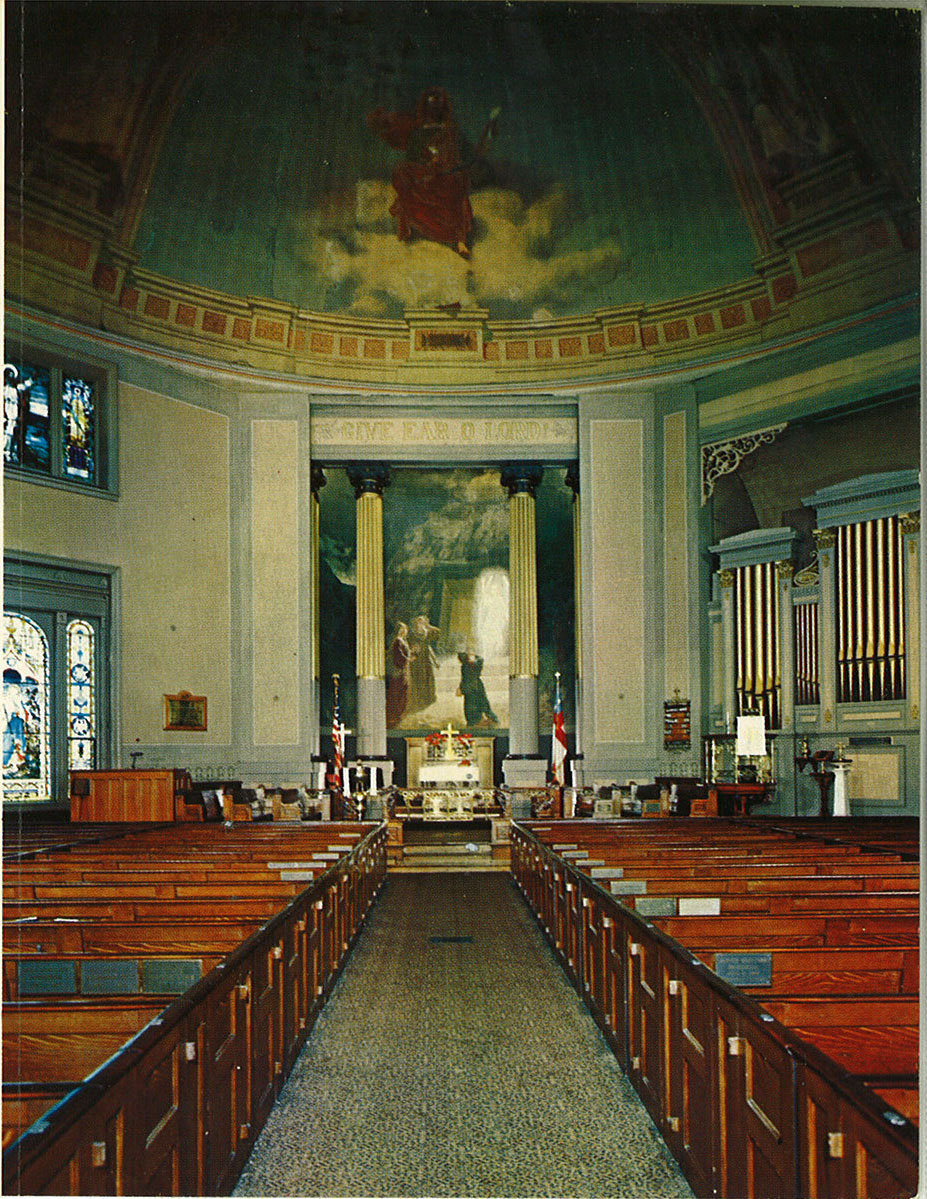
The interior of the church evolved aesthetically over time. Between 1845 and 1850, Richard Upjohn, the architect of New York’s Trinity Church and a major proponent of the Gothic Revival, filled the east-west cross aisles with pews, removed the central chancel, and extended the rail to incorporate a pulpit, lectern, and altar. Between 1874 and 1879, builders attached a Sunday school building called Teusler Hall to the east entrance, disrupting the symmetrical form of the church. Later additions included art glass windows, a painting of the Resurrection in the apse, and a dome fresco of the Angel Gabriel. (Seen below in this photograph from 1958.) These additions have since been removed.
 Additional Gradual Changes
• 1893 –Organ moved from the balcony to the northeast wall
• 1899 – A painting added to the back of the apse and a new fresco painted on the dome
• 1878-1901– Stained glass
• 1920s – Deteriorated dome frescoes repainted and repaired; electric lighting installed and carpet replaced
As Virginia Commonwealth University buildings slowly began to surround the church, the congregation dwindled and the remaining members were unable to afford its maintenance. In 1965, with fewer than 30 members left, the Episcopal leadership deconsecrated the church. After serving Richmond for over 150 years, Monumental Church was deeded to the Medical College of Virginia Foundation. MCV Foundation undertook an extensive renovation project in 1975 to restore the building to its original appearance. They hired Robert Winthrop with Glavé, Newman, Anderson Architects as principal architect. As part of this renovation, Winthrop demolished the Sunday school addition and removed the organ. He restored the balcony to its original 1814 design, removed the apse painting, and returned the pulpit to its original form. He attempted to restore the marbleizing on the columns and donated the carpeting and all stained glass pieces to St. James’s and St. Paul’s Episcopal churches. MCV Foundation had hoped to restore the church fully, but their funding fell short before they completed the project.
ENTER HISTORIC RICHMOND
Historic Richmond was deeded the church in 1983. By then, water damage had caused extensive decay. Historic Richmond’s modest budget allowed them to handle routine maintenance; however, the accidental toppling of the urn in 1999 caused their efforts to move forward unexpectedly. What began as a simple plan to repair the urn grew into the replacement of the original monument and a four-phased comprehensive plan to restore the historic site. While studying the fallen urn, preservationists uncovered irreparable damage from decades of exposure to pollutants. After ruling out conventional restoration techniques, the only viable option was to dismantle the original monument and replace it with a replica. In 2003, Historic Richmond hired John Milner Associates to guide the replication project. They brought in Direct Dimensions, Inc. from Baltimore to perform a high-resolution, 3D laser scan of the monument, which gave them data needed to create a 1/3 scale model. This model is an exact copy of the monument as it existed before it was dismantled and reflects its deteriorated condition.
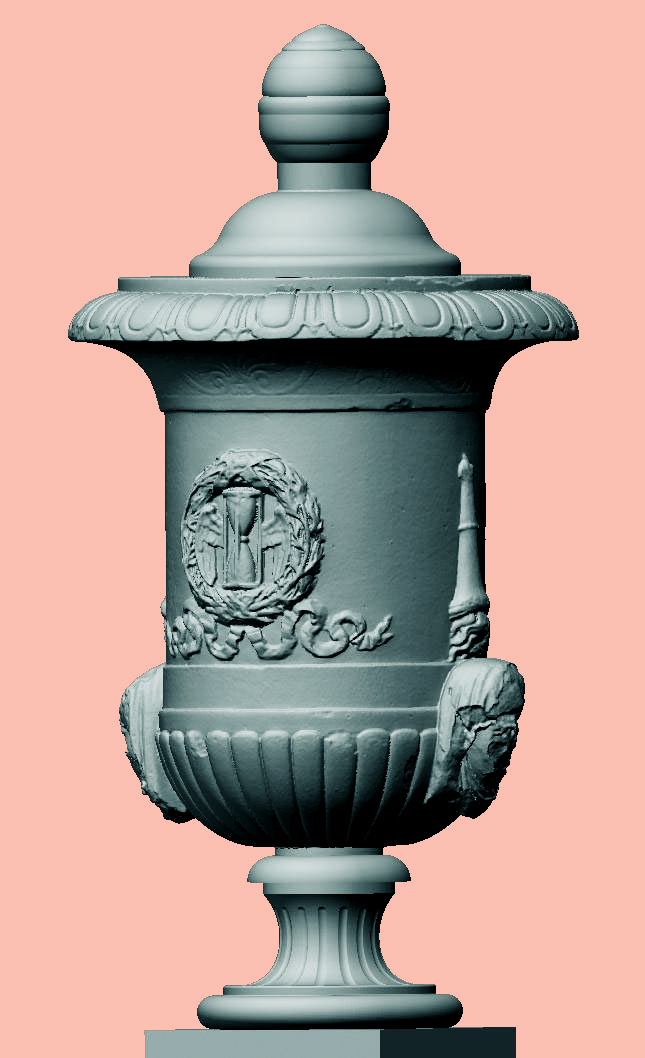
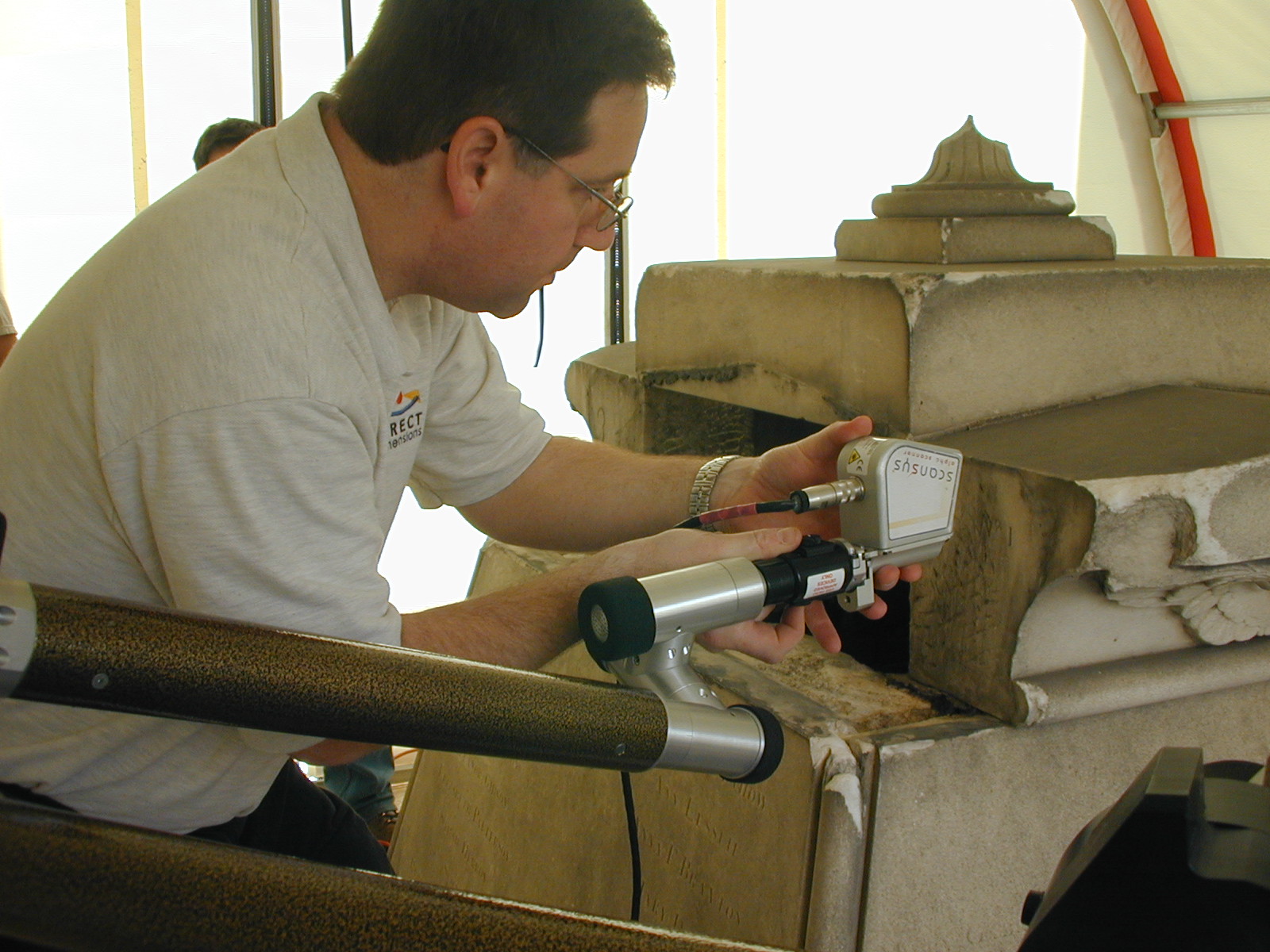
Using this model, they were also able to replace elements such as the mourning faces which had eroded over time. Before taking the monument apart, preservationists coated severely deteriorated sections with a consolidant to prevent further erosion. Once they removed each section, they were placed in custom-made storage boxes. Although it is now safely stored, the monument will unfortunately continue to deteriorate.
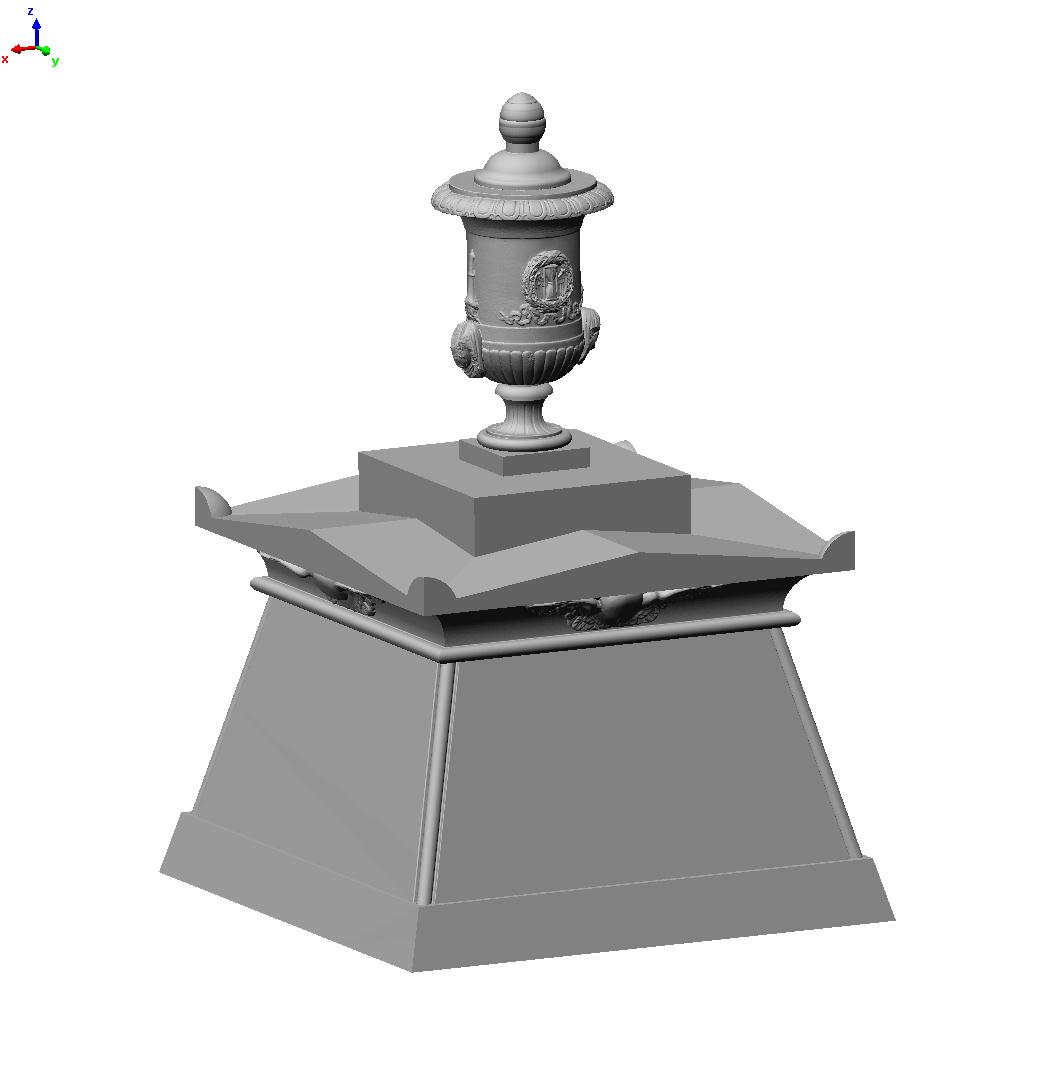
Pollution had saturated the marble and the chemical reaction causing the deterioration will continue until specialists find a new way to stop the breakdown of the stone. The three-year restoration project became an international effort involving artisans, scientists, preservationists, and conservationists. These professionals combined traditional techniques with cutting-edge laser technology to create the monument replica.
Throughout the process, footage was collected and used for the documentary Saving Grace: Resurrecting American History. In 2004 the William Byrd Branch of the Association for the Preservation of Virginia Antiquities teamed with Historic Richmond to continue the replication project. WBB/APVA agreed to fund both the replica and the film. Experience this fascinating journey for yourself via our online shop. The new partnership brought in S. McConnell and Sons of Kilkeel, Ireland, to sculpt the replica, the same company later chosen to create a Princess Diana memorial in London’s Hyde Park. McConnell and Sons used Thassos marble, a pure white Greek stone for the replica and came to the church to supervise its installation.
WE'RE NOT DONE YET
In 2002, Historic Richmond launched a four-phased restoration project to reactivate the site and return it to public use. Most recently, we completed an exterior recoating project as well as installing a brand new ADA-compliant ramp, to ensure that Monumental Church is accessible to everyone!
To support our ongoing efforts to steward and activate this national historic landmark, please consider making a donation to Historic Richmond today.